Taxes included.
Good antique condition. The scroll exhibits some water damage acquired over its lifetime along with minor tearing around the outer edges. These signs of age do not diminish the strength of the painting, which continues to display well. Measures approximately 172 × 43 cm.
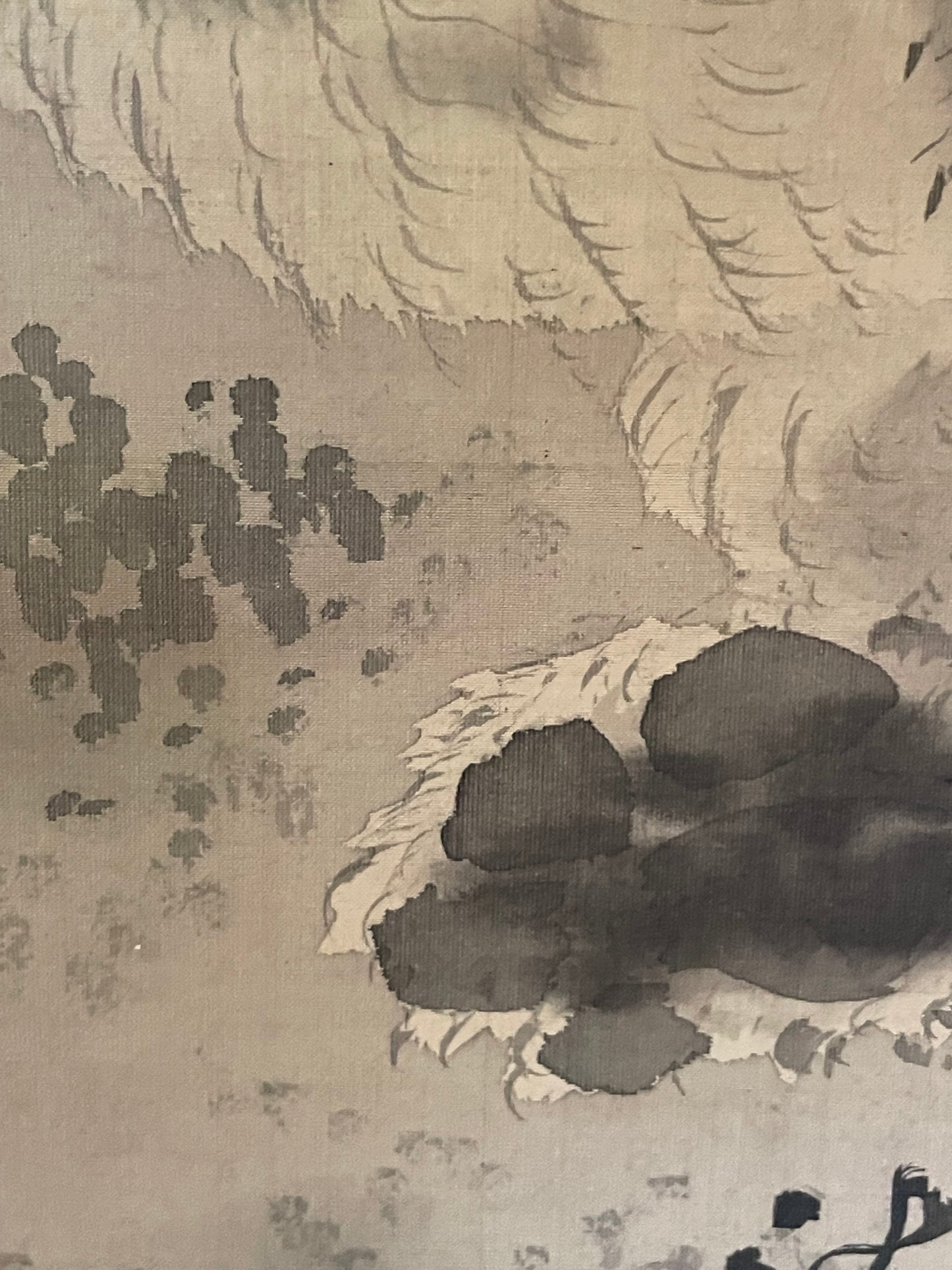
This original hand-painted hanging scroll dates to approximately 1890–1910 and is signed 澄◯斎, accompanied by a red artist's seal. Titled Tiger Beneath a Waterfall (瀑布猛虎図), it depicts a powerful tiger standing fearlessly beneath a rushing cascade, a traditional East Asian symbol of courage, perseverance, and unwavering determination.
Rendered with expressive brushwork, the tiger is shown alert and confident as torrents of water descend from the rocky cliffs above. The dramatic contrast between the force of the waterfall and the calm strength of the tiger creates a composition that conveys resilience in the face of adversity, a theme long celebrated in Japanese and Chinese painting.
Animal paintings became especially popular during the late Meiji period as artists associated with the Maruyama–Shijō and emerging Nihonga traditions pursued increasingly realistic depictions of wildlife. Combining careful observation with classical brush techniques, painters produced dynamic compositions that blended naturalism with traditional symbolism.
Although tigers are not native to Japan, they have remained one of the most admired subjects in Japanese art for centuries. Artists traditionally studied imported Chinese paintings, preserved tiger skins, and later photographs to create convincing portrayals. The image of a tiger beneath a waterfall became an enduring symbol of perseverance, inner strength, and the ability to overcome life's greatest challenges.
A striking late Meiji hanging scroll that combines bold brushwork, dramatic composition, and one of the most enduring symbols of courage in East Asian art.