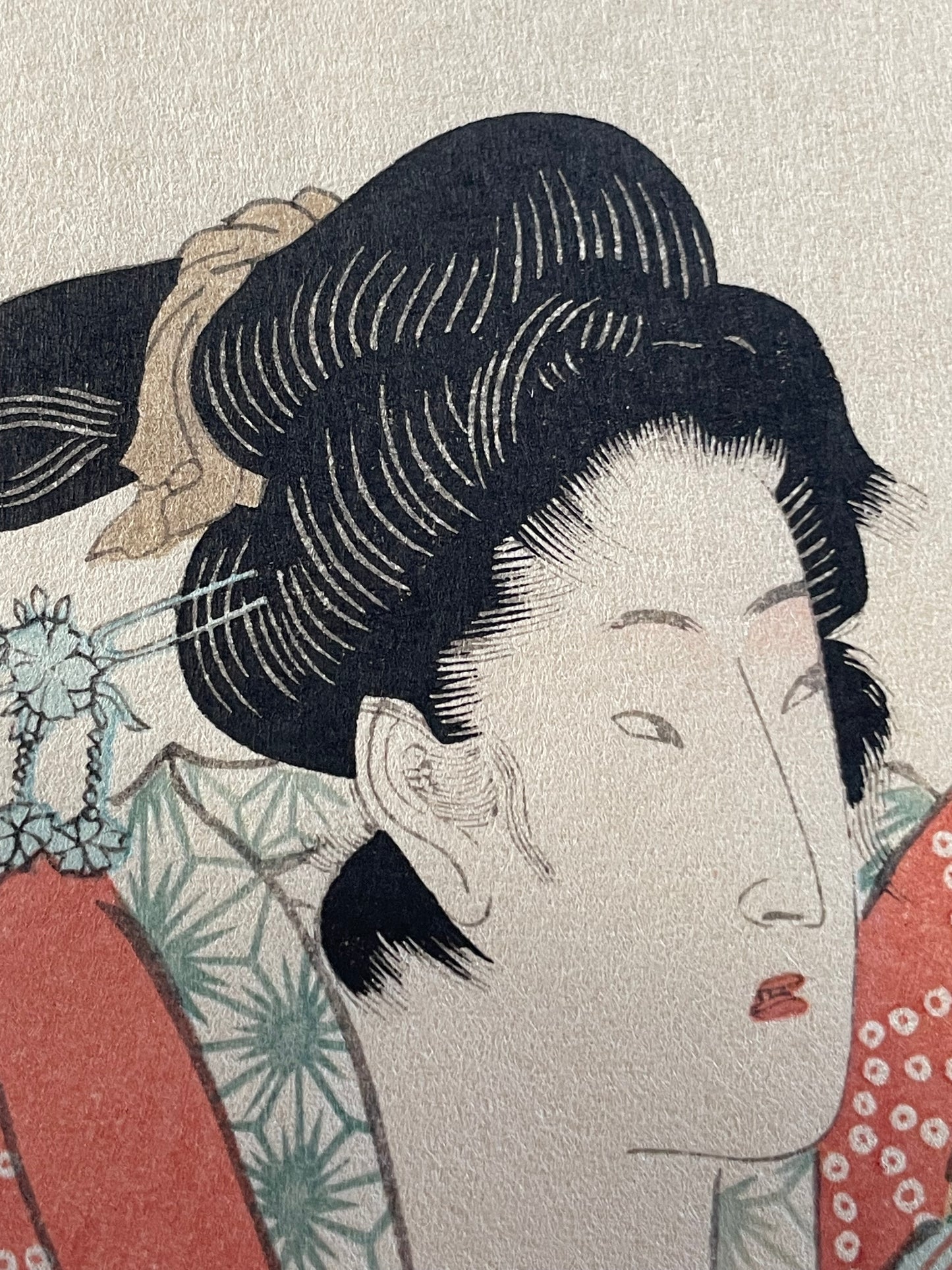
Excellent condition overall. The print has no creases, insect damage, or water damage. The paper has darkened slightly with age, lending the work an attractive antique appearance, but there are no significant flaws. The colors and details remain exceptionally well preserved.
This rare early work by Utagawa Hiroshige belongs to the series Soto to Uchi Sugata Hakkei (外と内姿八景, "Eight Views of Figures, Inside and Outside") and is titled Tanbo no Rakugan / Kinuginu no Banshō (田甫の落雁 / 衣々の晩鐘, "Descending Geese at the Rice Fields / Evening Bell of Morning Parting").
Produced circa 1821–1822 (Bunsei 4–5), this print comes from the earliest phase of Hiroshige's career, before he became world-famous for his landscape masterpieces such as The Fifty-Three Stations of the Tōkaidō. During this period, he was still producing bijin-ga and literary subjects in the style of his teacher, Utagawa Toyohiro.
The composition is a sophisticated mitate-e, or poetic parody, reinterpreting themes from the classical Eight Views of Ōmi. The circular inset scene references "Descending Geese at Katata," depicting travelers crossing rural rice fields beneath a flock of birds. The main image, however, presents a far more intimate scene.
The subtitle Kinuginu refers to the bittersweet custom of lovers parting at dawn. In Edo-period literature and poetry, the morning bell signaled the end of a clandestine evening together. Here, a high-ranking courtesan sits awake in bed, sorrowfully clutching her lover's garments after he has departed, creating an emotionally charged scene of longing and separation.
Particularly impressive is the print's technical execution. The intricate textile patterns—including the checked winter bedding, decorated kimono fabrics, and patterned floor covering—demonstrate the extraordinary skill of early nineteenth-century woodblock carvers and printers. Such complex designs required numerous carved blocks and represented a significant investment by the publisher.
Early Hiroshige bijin-ga are considerably scarcer than his later landscape prints and provide a fascinating glimpse into the formative years of one of Japan's greatest artists.
A rare and beautifully preserved example of early Hiroshige, combining literary sophistication, emotional depth, and exceptional craftsmanship. Suitable for collectors of ukiyo-e, bijin-ga, and important early nineteenth-century Japanese prints.