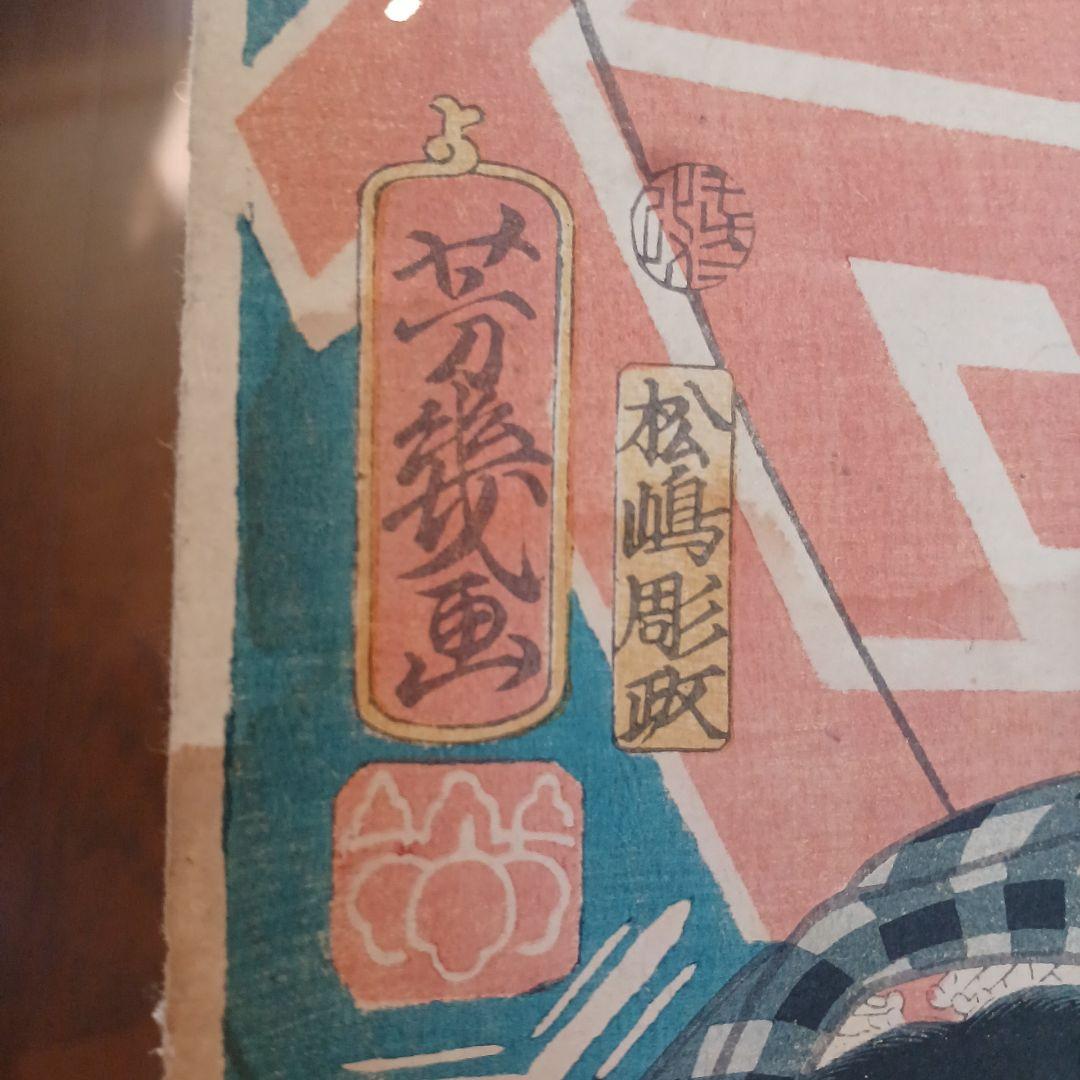
Very good condition overall for a large Edo-period triptych. There is minor insect damage and slight friction wear along the corners consistent with age and handling. The colors remain vivid, the lines are sharp, and there are no tears or signs of water damage.
This original ukiyo-e triptych was designed by Utagawa Yoshiiku (1833–1904), one of the foremost pupils of Utagawa Kuniyoshi and an important bridge between late Edo and Meiji-period printmaking.
The print belongs to the series Sandai-banashi Kōza Shinsaku (三題噺高座新作), meaning "A New Work from the Impromptu Storytelling Stage." It was published in the second month of 1863 (Bunkyū 3), as confirmed by the surviving Aratame censor seal and zodiac date mark. The publication coincided with the premiere of the play at the famous Ichimura-za theater in Edo.
The subject celebrates the uniquely Japanese tradition of sandai-banashi, a specialized form of rakugo storytelling in which performers improvise an entire narrative from three unrelated audience-supplied themes. Popular stories often became successful Kabuki productions, blending humor, drama, and clever wordplay.
The triptych depicts three principal characters from the performance:
Tora the Pickpocket of Takemon, portrayed by Ichimura Kakitsu II.
Tōji the Hairdresser of Wakokubashi, the central character, portrayed by Ichikawa Kodanji IV.
Hiranoya Kōjirō, portrayed by Sawamura Tosshō II.
The figures are rendered in the classic yakusha-e style, capturing dramatic poses, expressive faces, and richly patterned costumes. The checked and striped garments identify the characters as townspeople associated with the lively world of popular urban theater.
The large inscription Suikyō-ren refers to the literary and artistic appreciation society associated with the celebrated playwright Kawatake Mokuami, one of the most influential dramatists of nineteenth-century Japan.
Published by Maruya Tokuzō, a prominent Edo publisher of theatrical prints, this work represents the vibrant relationship between Kabuki theater, popular storytelling, and ukiyo-e during the final years of the Tokugawa period.
A large and visually impressive original Edo-period triptych, suitable for collectors of Kabuki theater, actor prints, and late Edo popular culture.