Taxes included.
Excellent condition overall. The print retains vivid colors and exceptionally sharp linework. There are a few tiny holes near the upper edge where the print was likely hung by a string at some point in its history. Aside from these minor marks, there is very little insect or water damage. The print is presented in a frame for preservation and display.
This authentic Meiji-period yakusha-e (Kabuki actor print) was created by Toyohara Kunichika in March 1887 (Meiji 20), during the height of his career as Japan's foremost designer of theatrical prints.
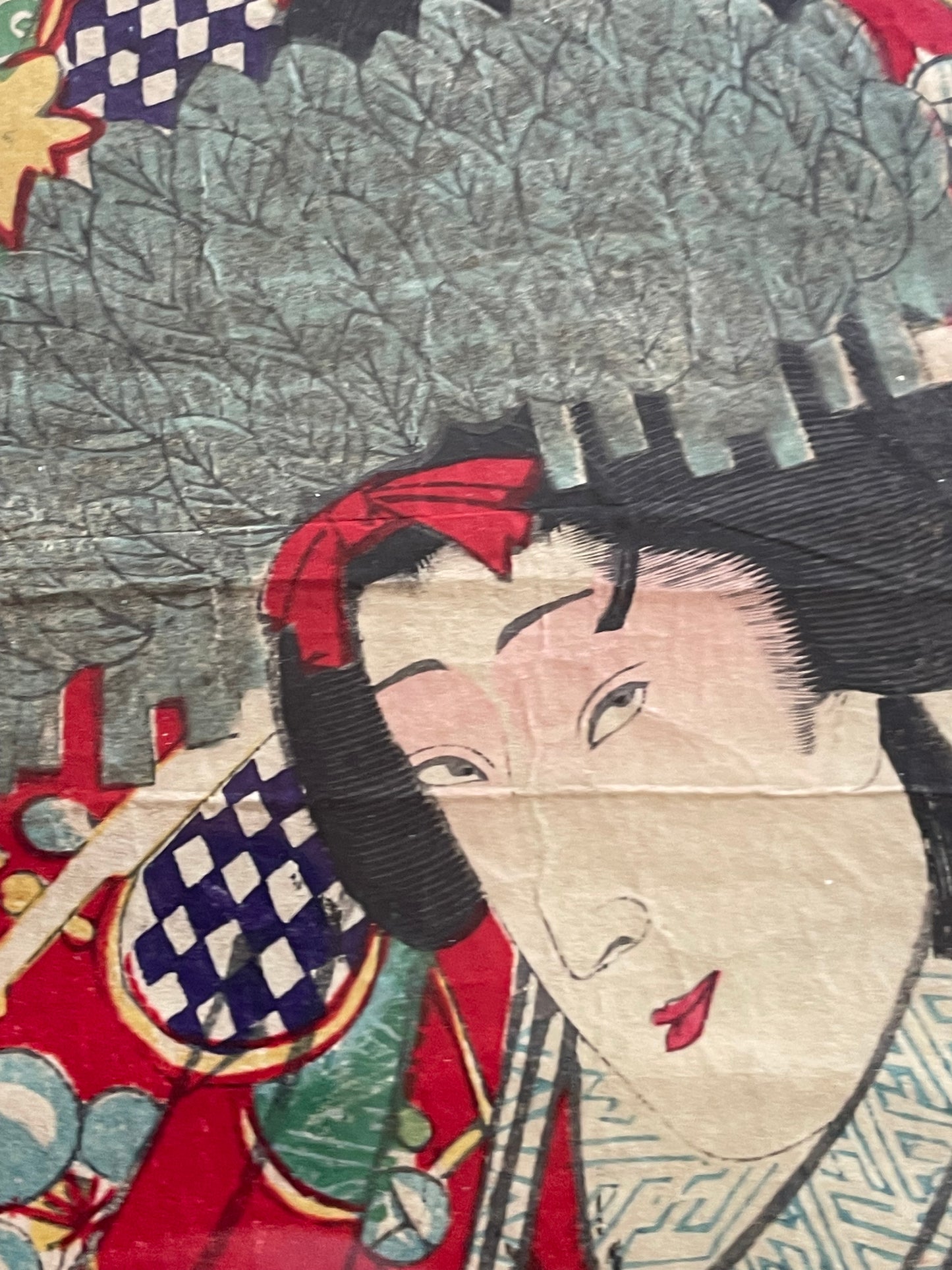
The print is titled Kamuro Tayori – Nakamura Fukusuke (禿たより 中村福助) and depicts the celebrated actor Nakamura Fukusuke IV performing the role of Kamuro Tayori, a young courtesan's attendant featured in the popular Kabuki dance-drama Modorigago Iro ni Aikata, commonly known as Modorikago.
Kunichika portrays the actor in the onnagata tradition, in which male performers specialize in female roles. The figure is shown wearing elaborate robes beneath cascading cherry blossoms, a composition that combines the elegance of bijin-ga with the dramatic presence of Kabuki theater. The rich colors and refined costume details exemplify the highly decorative style that made Kunichika's actor prints so popular during the Meiji period.
The upper cartouche identifies both the character and performer, reading "Kamuro Tayori – Nakamura Fukusuke," providing clear documentation of the role being portrayed. The print was originally published by Fukuda Kumajirō in 1887 and forms part of the vibrant theatrical print culture that flourished in Tokyo during the late nineteenth century.
Kunichika is widely regarded as the last great master of traditional Kabuki portraiture. His works captured the leading actors of his day and preserved the visual culture of Japan's theater world during a period of rapid modernization.
A beautifully preserved example of Meiji-era Kabuki art, combining historical significance, exceptional color, and one of the most respected names in late ukiyo-e. Suitable for collectors of actor prints, theater history, and Japanese woodblock prints.