Taxes included.
Good antique condition overall. The covers show heavy wear from use and age, while the interior pages are generally well preserved. Slight insect damage is present, along with several deep creases from long-term storage. The woodblock printing remains crisp with strong, unfaded ink, and the vegetable pigments on the coloured page remain remarkably vibrant for a book of this age.
Published during the Meiwa period (1771–1775) by Suwaraya Mohei (須原屋茂兵衛) of Edo, this rare woodblock-printed volume is Hyakunin Isshu Iri Onna Chōhōki (百人一首入女調法記), or a closely related edition. It is far more than a collection of classical poetry, serving as a comprehensive educational handbook for women during the late Edo period.
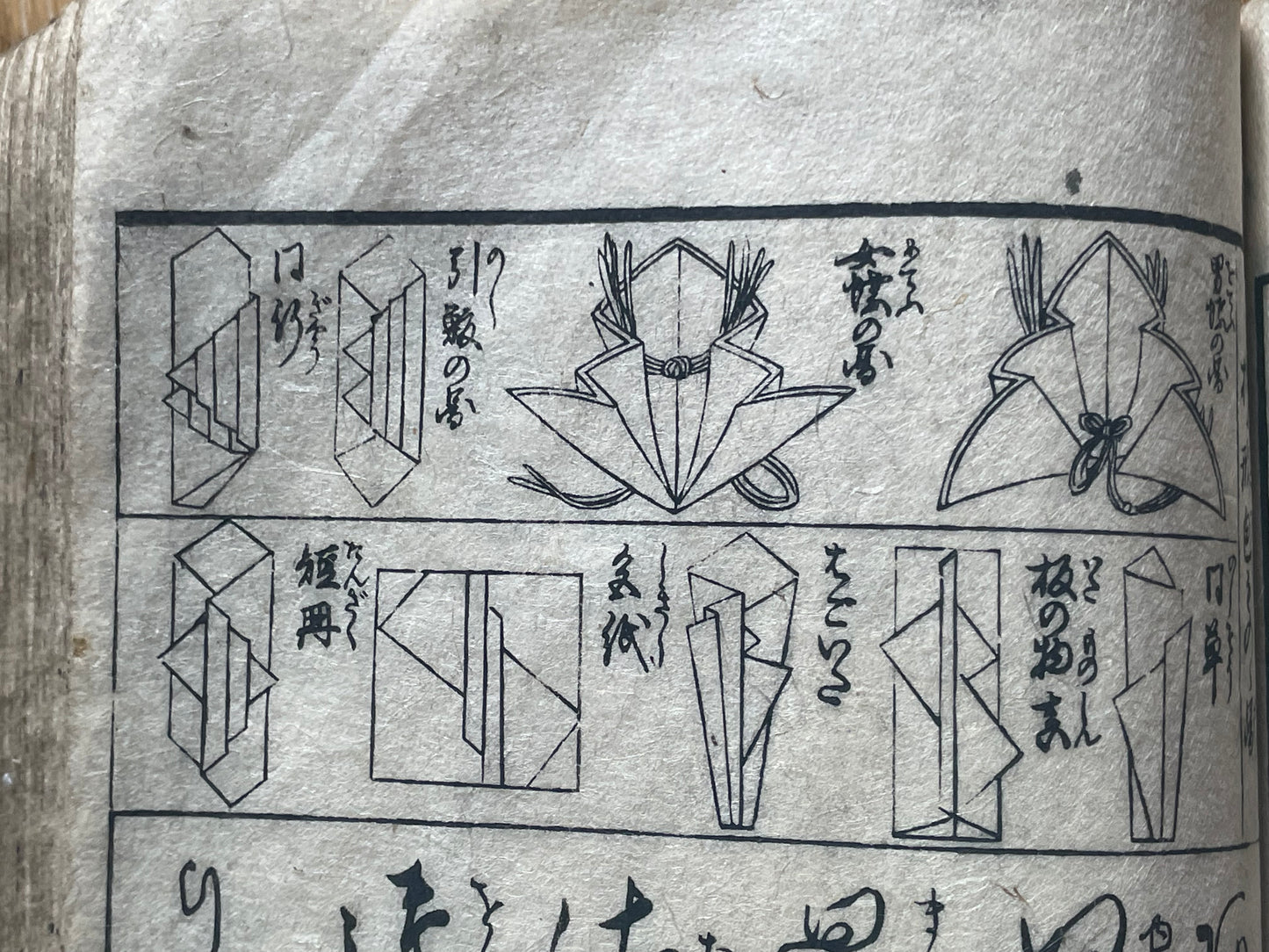
The volume contains the complete Ogura Hyakunin Isshu, together with sections on Reihō (etiquette), Ogasawara-style Origata (ceremonial gift folding), the Thirty-six Poetry Immortals, women's accomplishments, seasonal customs, ceremonial furnishings, Genji incense (源氏香), and practical household instruction. Combining literary education with everyday knowledge, it offered readers a broad introduction to the cultural ideals of the period.
Books of this type belonged to the oraimono (往来物) tradition, educational texts used to teach literacy, etiquette, and moral conduct. Intended primarily for women of samurai families and prosperous merchant households, they helped preserve classical court culture while providing practical guidance for daily life.
Rather than functioning solely as a Hyakunin Isshu anthology, this work serves as an illustrated encyclopedia of women's education. By bringing together poetry, ceremonial customs, gift-folding diagrams, furnishings, moral instruction, and traditional arts within a single volume, it provides an exceptional insight into the education and cultural expectations of women in eighteenth-century Japan.