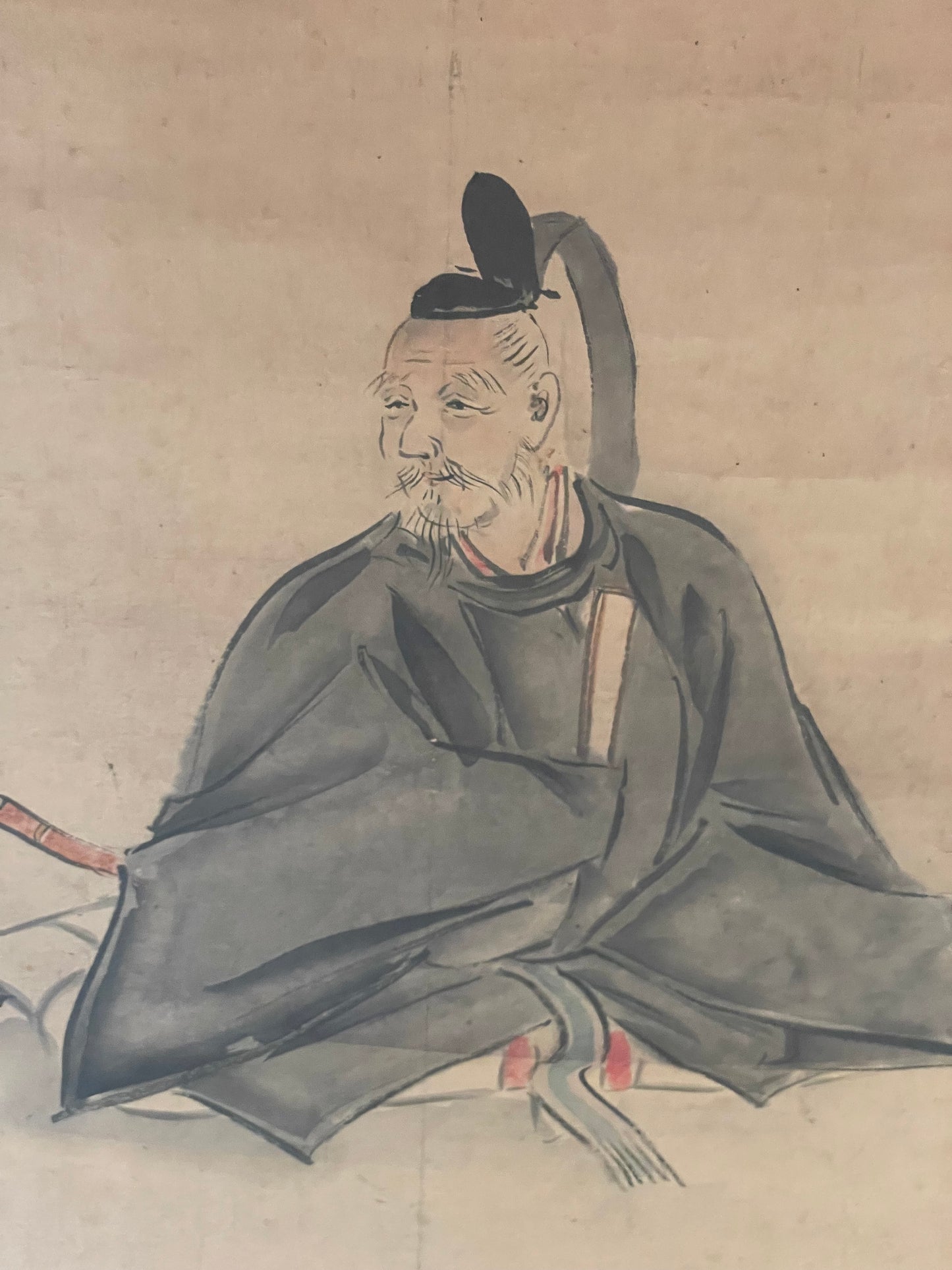
Edo 1815-50 Sumi-e Kakejku Emperor Kōrei Hanging Scroll by Kurozumi Munetada (Approximately 34X108CM)
Edo 1815-50 Sumi-e Kakejku Emperor Kōrei Hanging Scroll by Kurozumi Munetada (Approximately 34X108CM)
Good antique condition. There is slight damage primarily along the top of the scroll, where the wooden hanging dowel has partially separated and could be resecured with appropriate conservation adhesive. There is very little insect or water damage, and the calligraphy and portrait remain well preserved. Measures approximately 108 × 34 cm.
This original late Edo-period hanging scroll, dating from approximately 1815–1850, is attributed to Kurozumi Munetada (1780–1850), the founder of the Kurozumikyō Shinto movement. Titled 孝霊天皇勅語 (Emperor Kōrei's Imperial Edict), it combines a seated portrait of Emperor Kōrei with a handwritten transcription of his moral edict, presenting both a devotional image and a guide to righteous conduct.
The inscription begins with 「孝霊天皇勅語」 and includes the well-known passage 「除懐疫病、極済萬民、令徳日向、冥験年新」, expressing prayers for the removal of epidemics, relief for the suffering of the people, the cultivation of virtue, and the receipt of renewed divine blessings through benevolent governance.
Following a profound spiritual experience centered on Amaterasu Ōmikami in 1814, Kurozumi Munetada established Kurozumikyō, one of Japan's earliest modern Shinto movements. His teachings emphasized reverence for the Imperial lineage, moral self-cultivation, and harmony with the divine, spreading rapidly throughout western Japan during the late Edo period.
Devotional scrolls such as this were displayed in homes and places of worship as expressions of faith and ethical instruction. By combining the image of the legendary Emperor Kōrei with a handwritten moral edict, the scroll reflects the Kurozumikyō belief that spiritual devotion, virtuous leadership, and concern for the welfare of the people were inseparable ideals.
An important late Edo Shinto devotional scroll attributed to Kurozumi Munetada, representing the early history of Kurozumikyō and the religious revival movements that shaped nineteenth-century Japan.
Couldn't load pickup availability
Low stock: 1 left
View full details