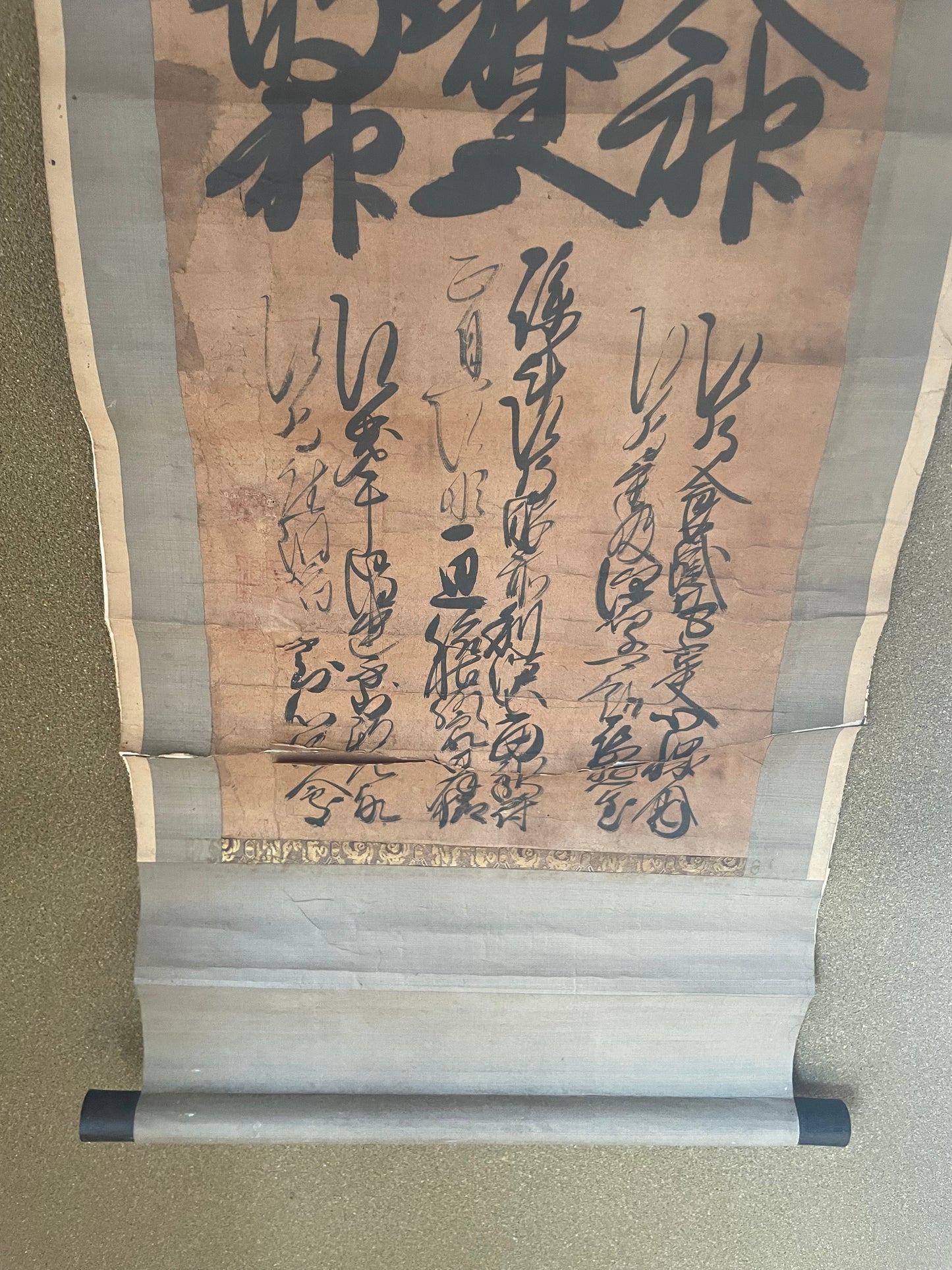
Edo 1840-60 Shinto Calligraphy Hanging Scroll – Amaterasu Ōmikami, Hachiman Ōkami & Kasuga Daimyōjin (Approximately 97X33CM)
Edo 1840-60 Shinto Calligraphy Hanging Scroll – Amaterasu Ōmikami, Hachiman Ōkami & Kasuga Daimyōjin (Approximately 97X33CM)
Good antique condition. The paper shows some cracks and uniform darkening consistent with its age. Despite these signs of wear, the ink remains deep and the calligraphy is crisp and well preserved, retaining its strong visual impact. Measures approximately 97 × 33 cm.
This original handwritten Shinto devotional hanging scroll dates to the late Edo period (circa 1840s–1860s) and invokes three of Japan's principal protective deities: Amaterasu Ōmikami (天照皇大神), Hachiman Ōkami (八幡大神), and Kasuga Daimyōjin (春日大明神). Created as an object of worship, it was intended for installation in a kamidana (household Shinto altar) to invoke divine protection, prosperity, and blessings for the household.
The scroll opens with large, boldly brushed calligraphy naming the three kami, followed by a handwritten devotional text describing their virtues and the protection they bestow upon the faithful. The brushwork and informal script are characteristic of shrine-produced or priestly devotional scrolls created for religious use rather than decorative display.
Before printed shrine scrolls became widely available during the Meiji period, devotional scrolls of this type were commonly hand-brushed by shrine priests or affiliated calligraphers. The combination of Amaterasu, Hachiman, and Kasuga was among the most widespread forms of household Shinto worship, bringing together the ancestral sun goddess, the guardian deity of warriors and the nation, and the protective kami associated with the Kasuga Shrine tradition.
The aged handmade paper, expressive freehand brushwork, and handwritten devotional inscription distinguish this example from the lithographed and woodblock-printed shrine scrolls that became common in the late nineteenth century. As a result, it offers a rare glimpse into the devotional practices of the late Edo period before mass-produced religious scrolls became widely distributed.
A fine late Edo Shinto devotional scroll combining historical significance, expressive calligraphy, and authentic religious use, making it an exceptional piece for collectors of Japanese religious art and early shrine materials.
Couldn't load pickup availability
Low stock: 1 left
View full details