Taxes included.
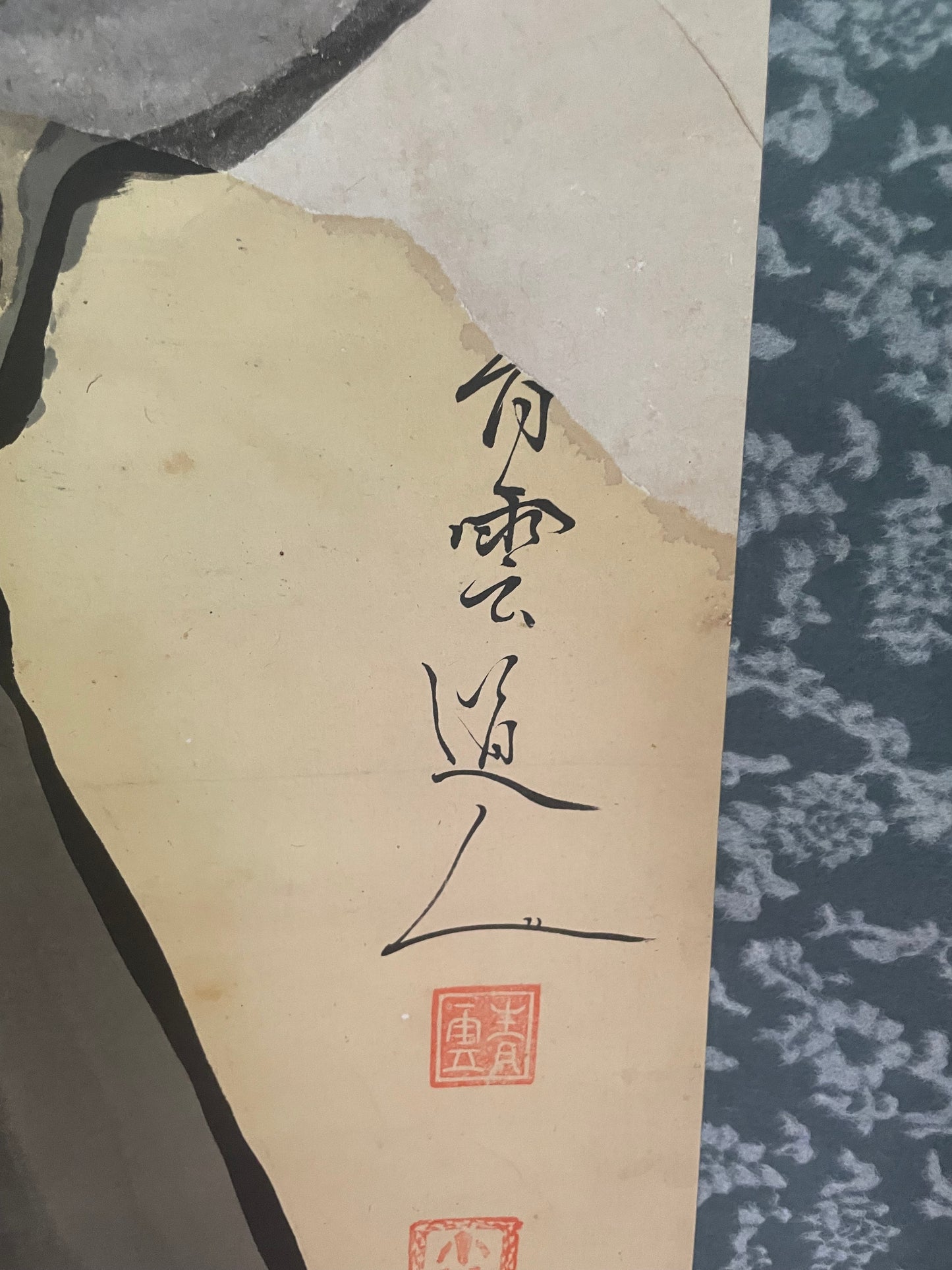
Good antique condition. The scroll shows some water damage consistent with its age, but the painting itself remains well preserved and displays attractively. The artwork retains strong visual presence despite the age-related wear. Measures approximately 197 × 70 cm.
This original hand-painted hanging scroll, dating from the 1910s–1930s, depicts Shōki (鍾馗), the legendary demon queller revered throughout East Asia as a guardian against evil spirits, disease, and misfortune. Signed 小林 (Kobayashi) and bearing two red artist's seals, the painting captures Shōki with his unmistakable fierce expression, flowing beard, and drawn sword, poised to drive away malevolent forces.
Shōki became one of the most popular protective subjects in Japanese painting during the Taishō and early Shōwa periods. Hanging scrolls of this type were commonly displayed in the tokonoma, particularly during Tango no Sekku (Boys' Day), where they symbolized courage, strength, and protection for children and the household.
According to legend, the Chinese Emperor Xuanzong dreamed of Shōki defeating the demons responsible for illness and misfortune. The story was later adopted into Japanese culture, where Shōki became a powerful symbol of protection against epidemics, evil spirits, and bad fortune. His image was believed to safeguard homes and families while promoting health and prosperity.
Painted with bold brushwork and expressive detail, this scroll reflects the enduring popularity of traditional protective imagery during the early twentieth century, when artists continued to produce devotional works rooted in centuries of Japanese and Chinese artistic tradition.
An impressive large-format Shōki hanging scroll that combines religious symbolism, expressive painting, and the enduring cultural importance of one of Japan's most recognizable guardian figures.